


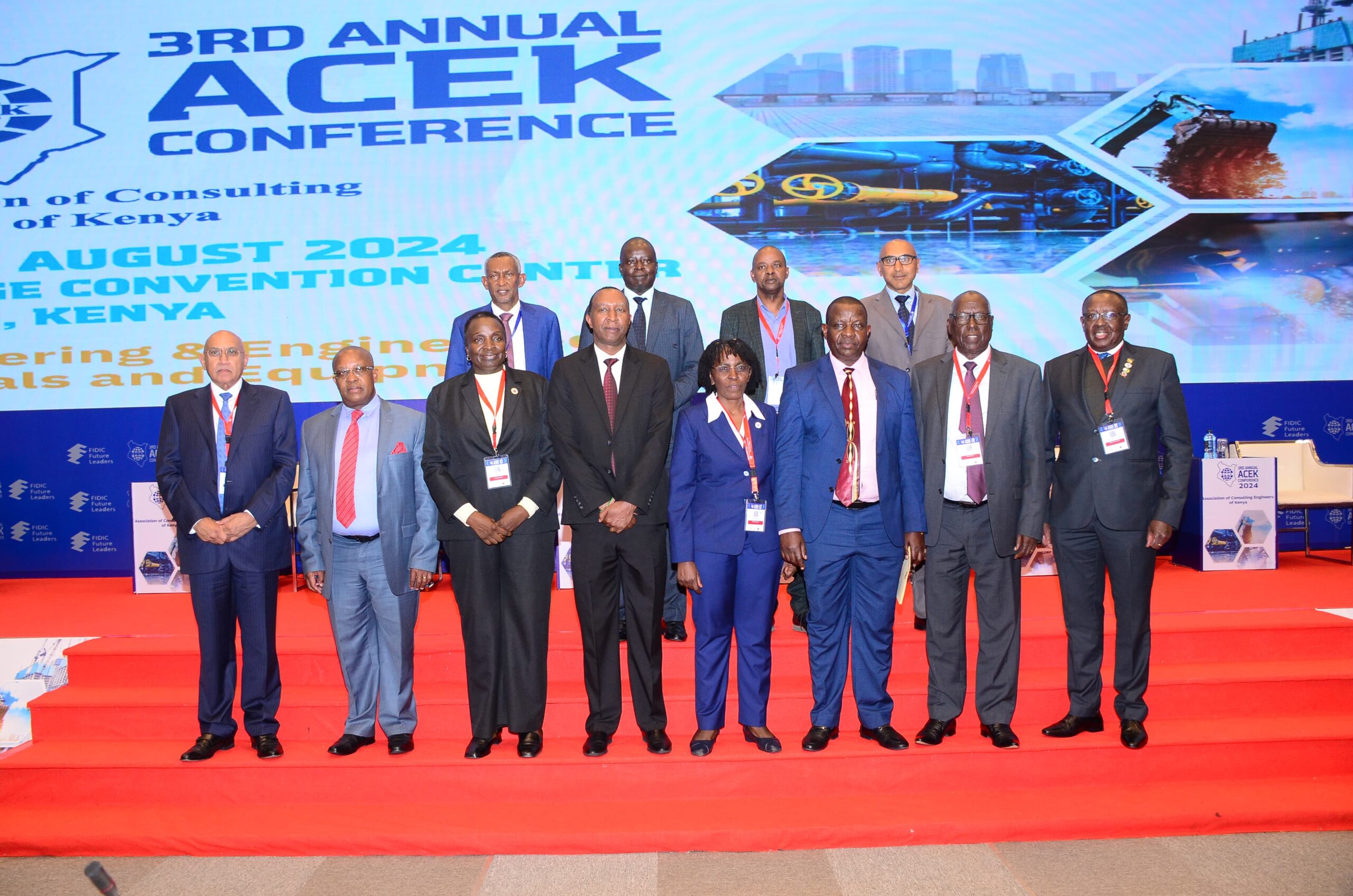
Over 350 delegates, including industry experts, academics, and engineering professionals, gathered at the 3rd Annual Convention organized by the Association of Consulting Engineers of Kenya (ACEK) to address critical issues in the engineering sector. The forum, running from August 28 to August 30, 2024, focused on the theme ‘Engineering and Engineering Materials Equipment,’ aiming to bridge the gap between engineering academia and industry to enhance the profession’s sustainability.
The convention highlighted how this gap has led to stagnation within the engineering profession, impeding its growth and vibrancy in the economy. Eng. Erastus Mwongera, Chairman of the Engineers Board of Kenya, emphasized the need for innovation and collaboration to drive the future of engineering. “The future of engineering lies in our ability to innovate and lead by working together,” Mwongera stated during the opening session. “By fostering collaboration, we can ensure a more resilient engineering sector.”
Currently, Kenya has 584 registered consulting engineers, 3,107 professional engineers, and 22,141 graduate engineers. Mwongera revealed that the Engineers Board is implementing several strategies to enhance the profession. These include increasing registration numbers, fast-tracking career progression guidelines, enacting the Building Control Bill, and expanding the Graduate Engineers Internship Program.

ACEK Chair Eng. Jane Mutilili urged engineers to push beyond conventional boundaries. “I challenge engineers to enhance Kenya’s global competitiveness through the integration of advanced technologies and materials in building projects,” Mutilili said.
The convention serves as a platform for generating practical solutions to industry problems by leveraging modern technology and innovation. It is poised to set a new standard in problem-solving and knowledge sharing within the engineering community.
As the convention progresses, the focus remains on developing actionable strategies to align engineering education with industry needs and drive forward the profession’s impact on both the economy and society.
