


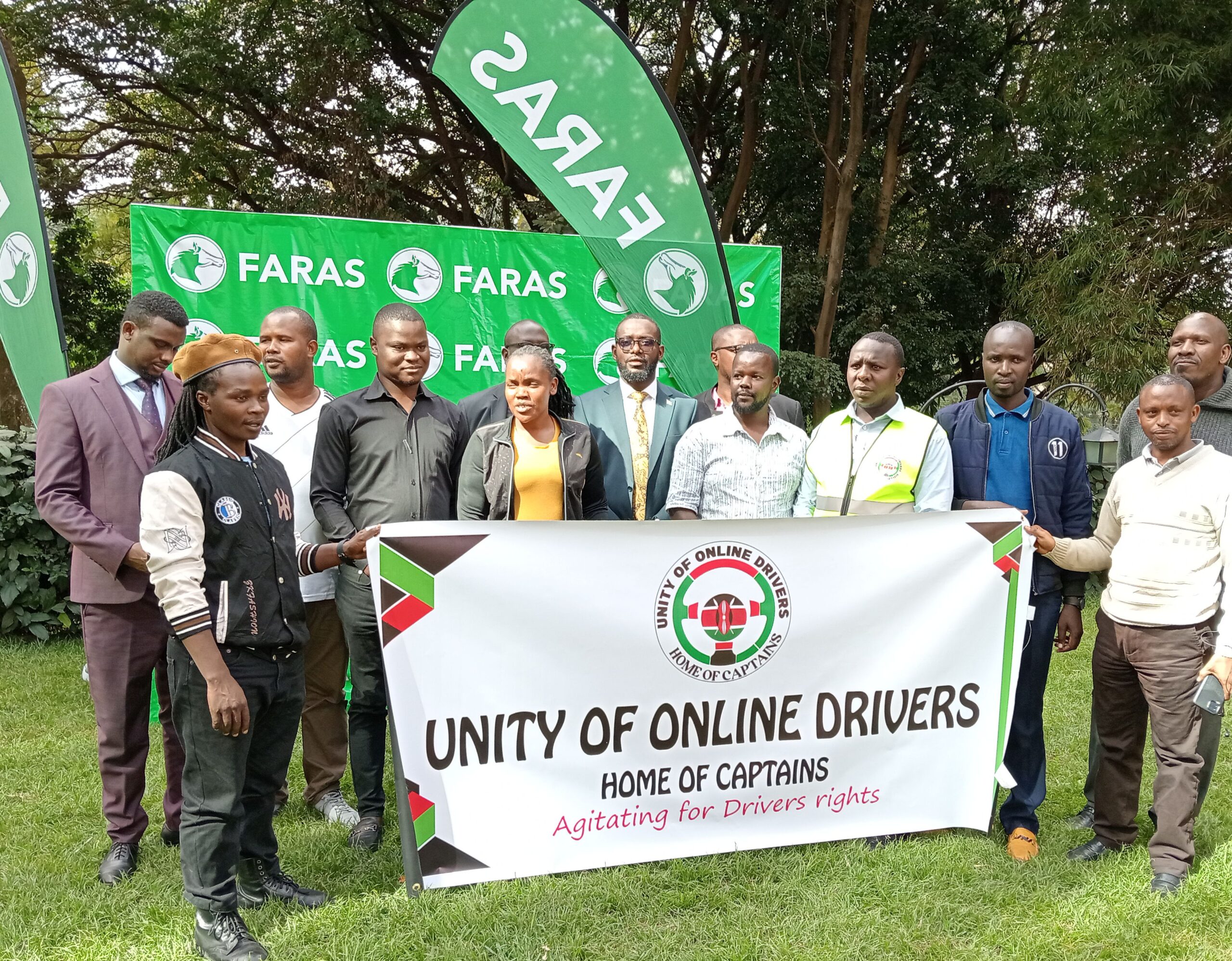
Kenya’s leading online taxi-hailing company, Faras, announced a significant adjustment to its fare structure on Tuesday, setting the minimum cost for rides at Ksh.240.
This decision comes in response to protests from local digital taxi drivers who have been voicing their concerns over decreasing fare rates despite rising fuel prices and the increased cost of living.
For weeks, drivers associated with Faras, Uber, Bolt, and other ride-hailing platforms have been frustrated by the disparity between their earnings and the high operational costs they face. This discontent has led to instances where drivers charge fares higher than those listed on the apps, resulting in occasional passenger harassment.
Faras General Manager Allan Maimbu addressed the issue during a press conference in Nairobi, explaining that the company has opted to raise all minimum prices to Ksh.240 and implement a general price increase.
Additionally, Faras has adjusted its commission rate to align with the maximum allowed by the National Transport and Safety Authority (NTSA), which is capped at 18 percent.

“To ease the impact of the price changes, we’ll continue to offer discounts to our customers, and as always, our drivers will receive the balance for discounted trips immediately after the trip ends, directly in their wallet,” Maimbu stated.
Despite these adjustments, driver unions, such as the Organisation of Online Drivers Kenya (OOD), had been advocating for a base fare increase to Ksh.300. Faras engaged in discussions with drivers on its platform and reached a consensus on the current adjustments.
Maimbu also extended an invitation to other industry players to collaborate on addressing driver concerns, suggesting that a unified approach could foster a more sustainable and equitable environment for both drivers and passengers. “By collaborating, we can create a fairer and more sustainable future for drivers and passengers and make Kenya a more welcoming place for the ride-hailing business,” he added.
The move by Faras follows broader industry trends, including a 2022 review of trip prices by Uber and Bolt after the Transport Ministry imposed a cap on commissions at 18 percent, reduced from 25 percent. However, drivers have continued to face financial challenges, including a 16 percent VAT on their commissions, further eroding their earnings.
Among the key players in Kenya’s digital taxi service market are Faras, (a Kenyan company), Uber (US), Bolt (Estonia), and Yego (India). The ongoing debate highlights the tensions between fare structures, operational costs, and regulatory impacts within the ride-hailing sector.