


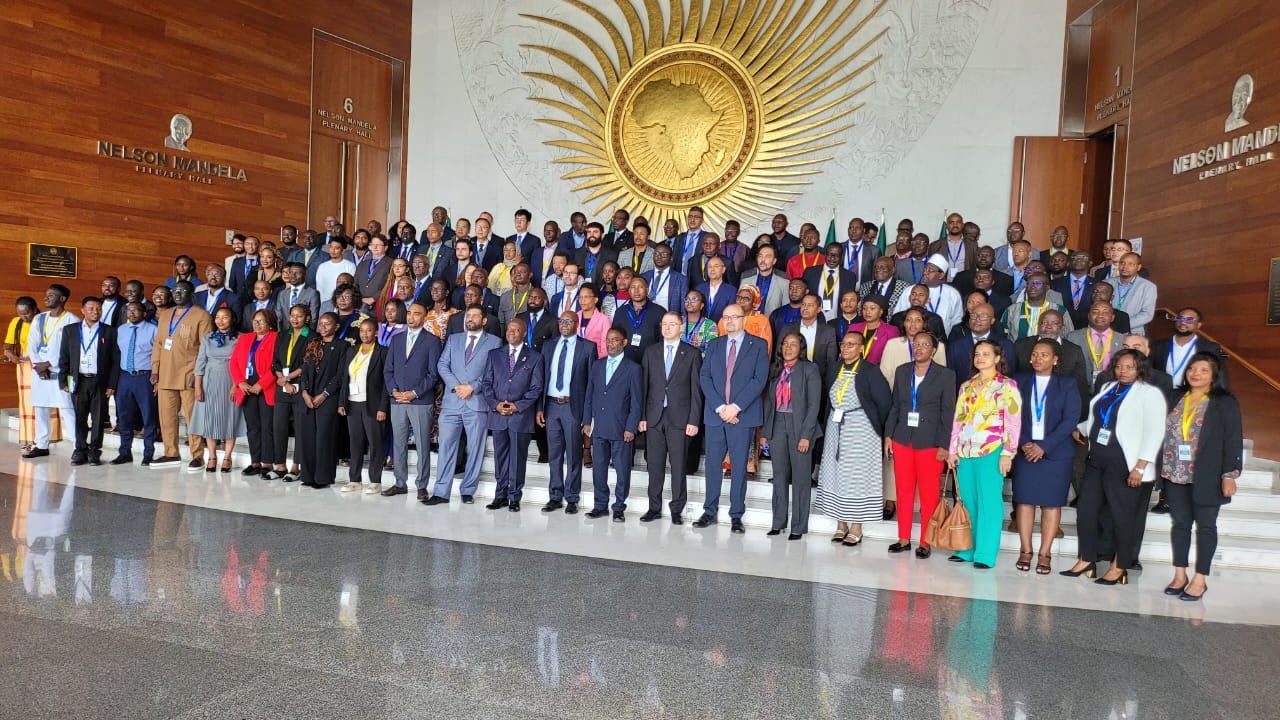
The African Union Headquarters has come alive with the commencement of the two-day Africa Multi-Stakeholder Conference on Carbon Markets. Convened by the African Union Commission (AUC) through its Department of Agriculture, Rural Development, Blue Economy and Sustainable Environment (ARBE), in collaboration with its partners, the conference seeks to chart a path for the continent in navigating the complexities of carbon markets.
In his opening address, Dr. Mithika Mwenda, Executive Director of the Pan African Climate Justice Alliance (PACJA), spoke on behalf of Africa Non-State Actors, highlighting the significance of the conference. He underscored that the event is a pivotal step towards defining Africa’s stance and solutions on carbon markets, aligning with the outcomes from COP28 and setting a roadmap to COP29.
Dr. Mwenda emphasized the dual nature of carbon markets, presenting both opportunities and challenges. He pointed out that Africa’s natural resources could drive sustainable development and poverty reduction, yet the conference must scrutinize whether carbon markets can effectively mobilize climate finance and reduce greenhouse gas emissions without compromising climate justice.
He reiterated the strategic aim of the conference to articulate Africa’s approach to carbon markets, emphasizing the continent’s critical role in the global decarbonization agenda and the necessity of addressing new climate finance goals. However, he expressed PACJA’s cautious stance, viewing carbon markets as potentially false solutions that might not benefit African nations adequately. He called for strategies that would press developed countries to reduce emissions while ensuring that African nations benefit.
Addressing the participants, Dr. Mwenda highlighted the moral responsibility to scrutinize the role of carbon markets within the context of climate justice for Africa. He urged the conference to avoid repeating historical injustices and to draw on the diverse perspectives of African countries, seeking wisdom rooted in African realities and climate justice principles.
 Today, July 24, 2024, at the African Union Headquarters, a two-day Remarks at the Africa Multi-Stakeholder Conference on Carbon Markets started.
He also brought attention to the impact on Indigenous communities, stressing the need for policies that safeguard these communities who are at the forefront of the climate crisis. Strengthening these safeguards was deemed essential.
Dr. Mwenda outlined four key issues that the conference should consider: land and resource claims, community displacement, benefit distribution, and human rights. He warned that carbon investments might threaten community tenure over land and resources, displace communities, and control land use. Moreover, he noted that the benefits of carbon markets to African people are minimal and must be scaled up to support frontline communities. Human rights, he emphasized, should be central to the discussions to ensure that Africa’s natural assets are not auctioned off.
Looking ahead, Dr. Mwenda advised that strategies should prioritize emission reductions, rather than permitting continued pollution by wealthy nations. He argued that carbon markets should not grant rights to natural assets to investors.
Dr. Mwenda called for transformative approaches and inclusive deliberations that align with Africa’s pursuit of climate justice. He urged participants to consider both visible and invisible voices and to focus on sustainable and equitable solutions.
As the conference progresses, it is expected to generate comprehensive discussions and actionable strategies that reflect the continent’s unique circumstances and aspirations in the global fight against climate change.