


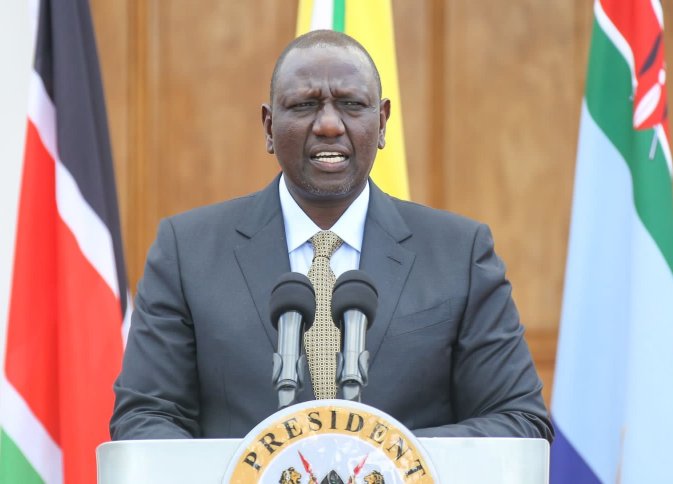
In a press briefing, President William Ruto announced a series of stringent austerity measures in response to Kenya’s ongoing economic challenges and recent public unrest. The President’s speech comes after a tumultuous fortnight marked by loss of life, injuries, and significant property damage.
Expressing his deepest condolences to the families affected by the violence, Ruto emphasized the importance of unity and resilience. “One life lost is a life too many,” he said, pledging government support to those impacted.
Highlighting the need for a national dialogue focused on critical issues like taxation, debt, and unemployment, Ruto announced the formation of an independent taskforce to conduct a forensic audit of Kenya’s public debt. The taskforce will report back within three months, aiming to provide clarity on the extent and management of the debt.
The President acknowledged the fiscal impact of the recent withdrawal of the Finance Bill, which has reduced revenue targets by Ksh 346 billion. To address this, Ruto proposed a balanced approach of cutting the budget by Ksh 177 billion and borrowing the remaining amount. This additional borrowing will increase the fiscal deficit from 3.3 percent to 4.6 percent
The funds will support key government services, including education, healthcare, and agricultural subsidies. Specific allocations include hiring junior secondary school teachers and medical interns, funding the milk stabilization program, reviving stalled road projects, and retaining the fertilizer subsidy program.
Additionally, the President announced the dissolution of 47 state corporations with overlapping functions, transferring their responsibilities to line ministries. Other austerity measures include suspending the filling of Chief Administrative Secretary positions, reducing the number of government advisors by 50 percent and eliminating budget lines for non-essential offices and renovations.
Further cost-cutting initiatives include a suspension on the purchase of new government vehicles, a ban on non-essential travel, and immediate retirement for public servants aged 60 and above. Public contributions or Harambees by state officers and public servants are also banned, with legislation to be prepared to ensure transparent charitable contributions.
President Ruto assured Kenyans that these measures aim to enhance government efficiency, transparency, and service delivery, setting the stage for economic recovery and sustainable development.