


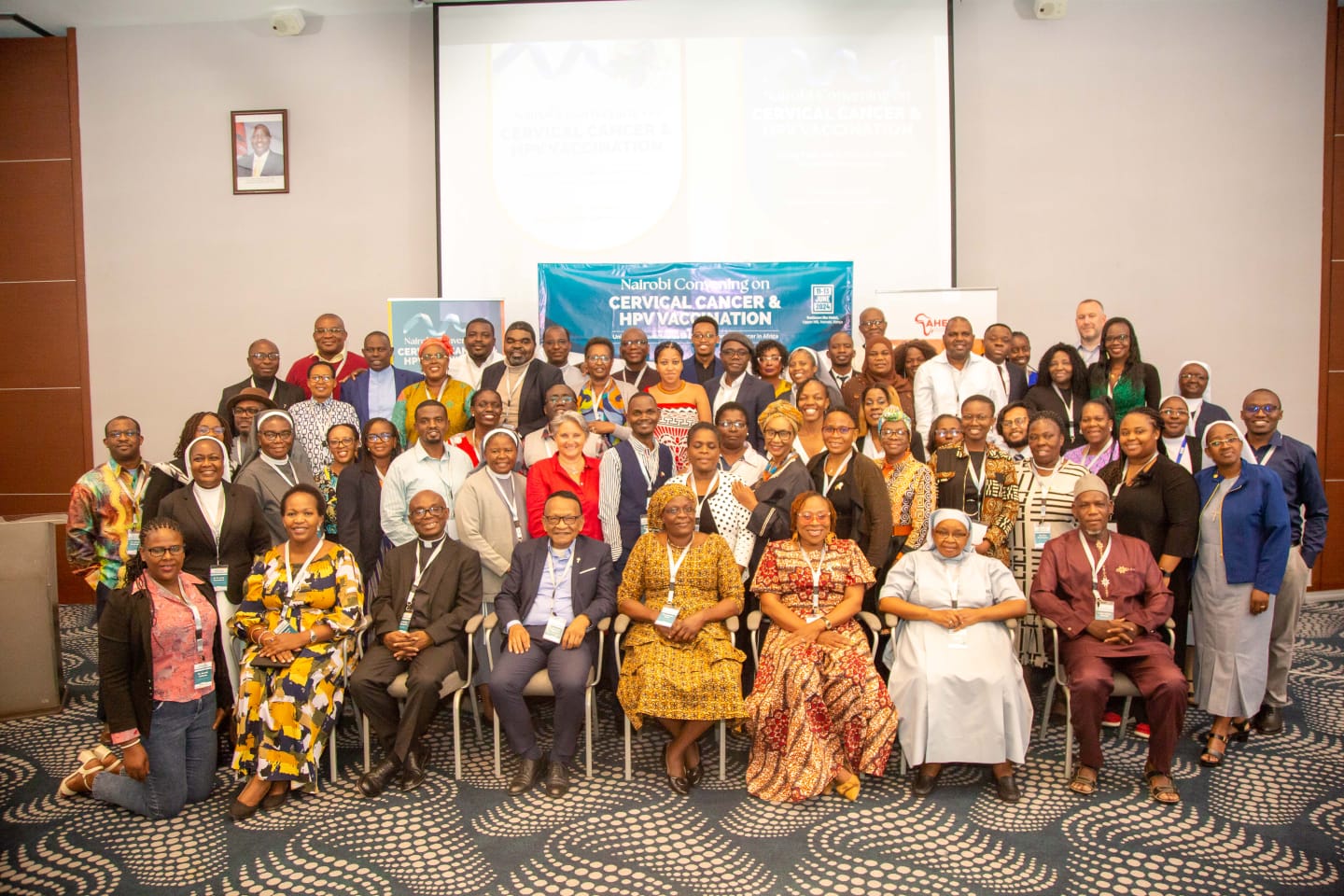
In a groundbreaking event aimed at eliminating cervical cancer, the Nairobi Cervical Cancer Elimination and HPV Vaccination Convening concluded June 13 with a resolute commitment to achieving the World Health Organization’s (WHO) 90-70-90 targets by 2030.
The conference, held from June 11-13 at the Radisson Blu Hotel in Nairobi, was convened by AHETI and JESUITS Africa, in collaboration with key stakeholders including KILELE Health and Association, brought together faith leaders, health professionals, advocates, and policy makers under the theme “Uniting Faith and Science against Cervical Cancer.”
Cervical cancer remains a significant public health issue in Africa, with approximately 126,000 new cases and 81,000 deaths annually. Despite the availability of effective prevention, treatment, and support tools, cultural, logistical, and informational barriers have hindered the optimal use of these services. This convening aimed to bridge these gaps by leveraging the influential role of faith leaders and communities in shaping health behaviors.
Participants celebrated the collaborative spirit that marked the event, establishing new partnerships and strengthening existing ones among faith-based organizations, health authorities, and advocacy groups. Key outcomes and commitments from the convening included:
1. Enhanced Collaborative Networks: Strengthened partnerships to enhance the reach and effectiveness of cervical cancer prevention efforts.
2. Capacity Building for Faith Leaders: Conducted workshops to equip faith leaders with knowledge and resources to advocate for HPV vaccination, screening, treatment, palliative care, and survivorship.
3. Ramping Up Vaccination Efforts: Leveraged faith networks to increase HPV vaccination rates, expanding access and public awareness to ensure widespread uptake.
4. Expanded Screening Initiatives: Utilized faith leaders’ influence to broaden screening activities and improve infrastructure to reach remote areas, making screening a routine part of women’s healthcare.
5. Strengthening Service Delivery and Guidelines: Highlighted the need to enhance local health facilities, offer continuous training for healthcare professionals, and ensure the availability of essential medical supplies for effective treatment.
6. Policy Engagement and Advocacy: Proposed strategic discussions with policy makers to advocate for comprehensive cervical cancer care policies aligned with WHO targets.
7. Integrated Sustainable Healthcare Models: Recommended incorporating cervical cancer prevention and treatment into primary healthcare systems for lifelong access.
8. Community Engagement and Education: Dedicated to increasing public awareness and dispelling myths and stigma through culturally sensitive advocacy strategies, educational programs, and community workshops.
9. Monitoring and Evaluation: Established a framework for ongoing monitoring and evaluation to assess and improve the effectiveness of implemented strategies.
10. Resolution to Sustain Momentum: Committed to maintaining momentum through regular follow-up meetings and communications among stakeholders.
The convening emphasized the urgent need to address cervical cancer in Africa, where the disease takes a heavy toll on women and their families. By uniting the influence of faith leaders with scientific knowledge, participants are optimistic about significantly reducing the burden of cervical cancer on the continent.
As the conference concluded, participants were energized and committed to continuing their efforts to combat cervical cancer through increased HPV vaccination rates, enhanced screening, robust treatment protocols, and effective public health strategies. The collective resolve of this diverse group marks a critical step towards a future where cervical cancer no longer poses a significant threat to the health and well-being of African women.
